Windshield Snow Car Cover: Why It Fails & How to Get a Perfect Fit Every Time
Direct Answer: A windshield snow car cover fails to protect properly when it’s undersized, has worn-out mirror straps, or isn’t secured tightly enough against wind. Choosing a cover matched to your windshield’s exact dimensions and securing all strap points fixes most fit and blow-off issues immediately.
Introduction
Scraping ice off a windshield at 6 a.m. is one of the most avoidable parts of winter driving, and that’s exactly what a windshield snow car cover is supposed to prevent. But plenty of drivers buy one, use it twice, and go back to scraping because the cover didn’t fit right, blew off overnight, or froze solid anyway. A good car windshield snow cover should snap on in under a minute and come off just as fast, with zero ice contact on the glass underneath. When that doesn’t happen, it’s rarely the concept that’s broken, it’s almost always the fit, the straps, or how it was installed that night.
Why does this problem happen?
Most windshield snow cover for car failures trace back to a short list of causes:
- Wrong size for the windshield. A cover cut for a sedan won’t fully seal an SUV or truck windshield, leaving gaps where snow and ice sneak through at the edges.
- Worn or stretched mirror straps. The elastic loops that hook over side mirrors lose tension over a season or two, letting wind work the cover loose overnight.
- Improper tensioning. Even a correctly sized cover can flap and loosen if it isn’t pulled taut and the straps aren’t fully seated behind the mirror housing.
- Fabric degradation from UV and cold cycling. Cheaper materials get brittle in freezing temperatures and lose their water-resistant coating faster, reducing grip and flexibility exactly when you need both.
- Magnetic edge failure. Covers with magnetic strips lose holding strength if the magnets get wet repeatedly or if they’re not making full contact with the vehicle’s metal frame.
- Wind exposure in open parking. A cover rated fine for light snow can still peel back in sustained wind if it’s not anchored at enough points.
What early warning signs appear before full failure?
Catch these signs before you’re back to scraping every morning:
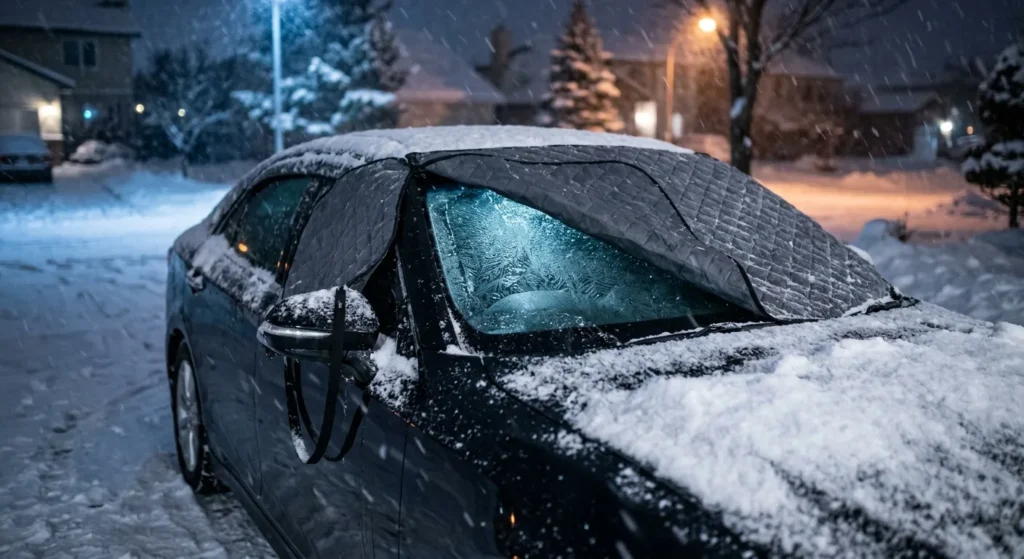
[IMAGE PLACEHOLDER 1 — Alt text: “Windshield snow car cover installed overnight to prevent ice buildup”]
- Mirror straps feel loose or stretched compared to when the cover was new.
- One corner consistently lifts or flaps even after a careful install.
- Visible fraying or thinning fabric at the strap attachment points.
- Magnetic edges no longer “snap” firmly into place against the hood or roof.
- Water pooling instead of beading off the cover’s surface, a sign the coating is wearing out.
How to diagnose and fix this problem step-by-step?
Tools Needed:
- Tape measure (to confirm windshield dimensions)
- Microfiber cloth (for cleaning mirror and glass contact points)
- Replacement elastic straps (if originals are stretched or torn)
- Manufacturer sizing chart (most brands, including CosyZone, publish vehicle-specific size guides)
Chronological Fix Guide:
- Measure your windshield before troubleshooting further. Width and height both matter; a cover that’s even a few inches short on either dimension will leave exposed glass no matter how well you install it.
- Check the sizing chart against your actual vehicle. Cross-reference your measurements with the manufacturer’s size guide rather than relying on the vehicle category alone, since windshield dimensions vary even within the same body style.
- Inspect and test the mirror straps. Hook them over the mirrors and tug gently. If they stretch loosely with little resistance, they’ve lost tension and need replacing.
- Clean the contact surfaces. Wipe down the hood edge, mirror housings, and any magnetic contact points with a microfiber cloth to remove road film that reduces grip.
- Install with full tension. Drape the cover evenly, hook both mirror straps first, then pull the cover taut toward the wipers and secure any additional anchor points (door-tuck flaps, magnetic edges, or lower straps) before letting go.
- Test for movement. Give the cover a firm shake test by hand to simulate wind. If any section lifts easily, re-tension or reposition before leaving it overnight.
- Replace worn components rather than the whole cover. If only the straps are the issue, most brands sell replacement elastic loops separately, extending the life of an otherwise good windshield protection from snow setup.
Expert’s Note: Real-World Testing & Diagnostic Insight
A customer kept finding their CosyZone car windshield cover flipped onto the hood after windy nights, even though it fit the windshield fine. On inspection, the mirror straps were seated loosely over the mirror housing rather than tucked fully behind it, leaving just enough slack for wind to work the fabric loose. Reseating both straps snugly behind the mirrors and adding the cover’s lower door-tuck flaps solved it completely, with zero movement through the next week of wind and snow. The lesson: a properly sized cover can still fail if the attachment points aren’t fully engaged, not just loosely draped.
How to prevent this issue from happening again?
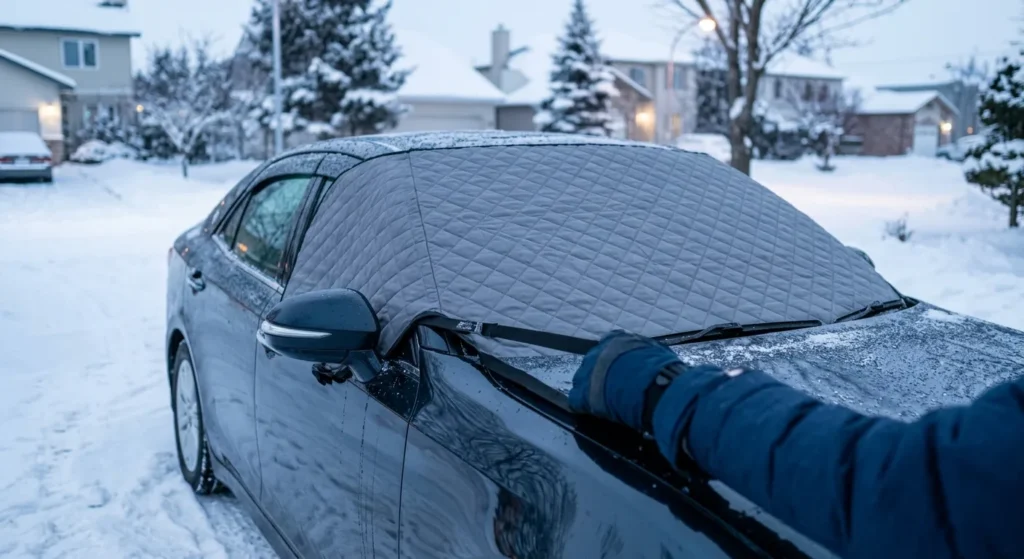
[IMAGE PLACEHOLDER 2 — Alt text: “Snow cover car windshield secured tightly with mirror straps in winter”]
- Store the cover dry between uses. Packing it away wet accelerates fabric breakdown and weakens the water-resistant coating faster than normal wear would.
- Check strap elasticity each season. Elastic degrades with repeated cold exposure, so a quick stretch test before winter starts saves a frustrating morning later.
- Avoid dragging the cover across rough or salted pavement. Grit embedded in the fabric can abrade the coating and create weak points over time.
- Use all available anchor points, not just the mirror straps, for the best hold in high-wind conditions.
- Clean magnetic edges regularly if your cover uses them, since road salt and grime reduce magnetic contact strength over a season.
- Rotate between two covers if you park outdoors daily, letting one fully dry while the other is in use, extending the lifespan of both.
FAQ
Fully seat the mirror straps behind the mirror housing rather than just hooking them loosely, then pull the cover taut and secure any additional anchor points like door-tuck flaps. A properly tensioned cover resists wind far better than one simply draped over the glass. Checking strap tension each season also prevents gradual loosening from stretched elastic.
This almost always means the cover is undersized for your specific windshield, leaving gaps where wind-driven snow can reach the glass. Measure your windshield and compare it against the manufacturer’s sizing chart rather than assuming a generic size fits your vehicle. Switching to a properly sized cover typically resolves edge ice completely.
With proper care and dry storage, a quality cover typically lasts two to four winter seasons before the fabric coating or straps need attention. Straps often wear out before the main fabric does, so replacing just the straps can extend a cover’s usable life. If the fabric itself is cracking or no longer beading water, it’s time for a full replacement.
Conclusion
A windshield snow car cover is one of the simplest ways to skip the morning scraping routine, but only when it’s correctly sized, properly tensioned, and maintained each season. Measure before you buy, check your straps regularly, and use every anchor point available, and you’ll get a reliable, ice-free windshield all winter long. A few minutes of setup each night means a faster, safer start to every cold-weather drive.